Fort Taylor
Fort Taylor (1846-1947) - Construction of this Third System Fort began in Jun 1845 and was essentially complete in 1866. Named for Zachary Taylor and also known as Fort Zachary Taylor. Declared surplus and turned over to the Navy in 1947.
-
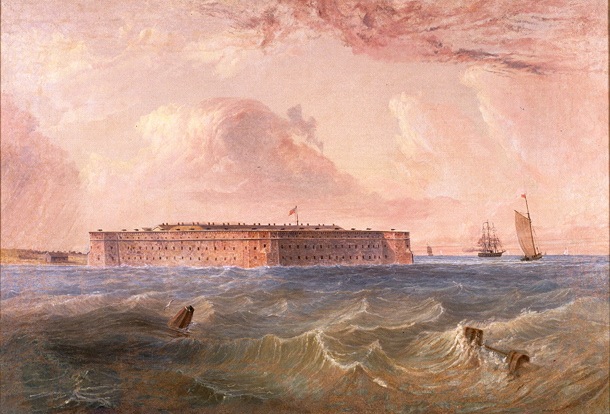 Fort Taylor 1872, by Seth Eastman
 -
 Fort Taylor from the land side 1861
 -
 Fort Taylor North Casemates and Barracks
 -
 Fort Taylor South East Bastion


History

Fort Taylor was designed as a three-tiered, double casemated, Third System brick and masonry fort in the shape of a trapezoid. The land face was 495' long and the seaward curtains were 255' long each. There were four bastions, three seaward facing curtains and one land facing gorge.
The fort was located offshore about 1000' on the southwestern side of Key West Island, Florida.
The landward side of the fort was to be protected by a large casemated cover face located on Key West itself, directly across from the fort with a drawbridge connecting them. The cover face was to have mounted 48 guns but was never built.

Construction began in Jun 1845 by the end of 1860 the fort was ready for occupancy and by 1866 it was completed. When completed the Fort could mount 140 cannons and house 450 men. The armament varied over the years but by the end of the U.S. Civil War, it mounted some of the largest smoothbore cannons the Union had and the best-rifled Parrot guns available.
Later modifications to the fort during the Endicott Period reduced the fort to a single tier of casemates to reduce the possibility of enemy damage to the brick walls.
Key West Barracks, built in 1831, provided a support facility in Key West during the construction and garrisoning of Fort Taylor.
Martello Towers
Two Martello Towers were constructed along the eastern shore of Key West as defensive structures for the fort itself. Each tower was fronted by a casemated battery with positions for 14 guns. The towers were square structures with a single tier of two-story casemates. On top of each tower was a barbette tier with four gun emplacements.
The two towers were called Martello Tower 1 (West) and Martello Tower 2 (East). Tower 1 was located near the corner of Atlantic Blvd. and White Street. During the Endicott Period Tower 1 was modified and Battery Inman placed where the frontal casemates were originally located. Tower 2 is located at the southeastern end of South Roosevelt Blvd.

U.S. Civil War

Union troops secured the fort for the Union 15 Jan 1861 and by March 1861 the fort had a complement of 178 guns. Fort Taylor, Fort Jefferson, and Fort Pickens were held by Union forces throughout the U.S. Civil War. Fort Taylor served as headquarters for the Union Navy East Gulf Coast Blockading Squadron and guarded some 300 captured vessels anchored in front of the fort. Fort Taylor never saw hostile action.
| Battery | No. | Caliber | Type Mount | Service Years | Notes | ||||||||||||||||||||||||||||||||||||||||||||||||||||||||||||||||||||||||||||||||||||||||||||||||||||||||||||||||||||||||||||||
|---|---|---|---|---|---|---|---|---|---|---|---|---|---|---|---|---|---|---|---|---|---|---|---|---|---|---|---|---|---|---|---|---|---|---|---|---|---|---|---|---|---|---|---|---|---|---|---|---|---|---|---|---|---|---|---|---|---|---|---|---|---|---|---|---|---|---|---|---|---|---|---|---|---|---|---|---|---|---|---|---|---|---|---|---|---|---|---|---|---|---|---|---|---|---|---|---|---|---|---|---|---|---|---|---|---|---|---|---|---|---|---|---|---|---|---|---|---|---|---|---|---|---|---|---|---|---|---|---|---|---|---|
| Battery Unnamed | 6 | 10" | Columbiads | 1861-18?? | |||||||||||||||||||||||||||||||||||||||||||||||||||||||||||||||||||||||||||||||||||||||||||||||||||||||||||||||||||||||||||||||
| Battery Unnamed | 83 | 8" | Columbiads | 1861-18?? | |||||||||||||||||||||||||||||||||||||||||||||||||||||||||||||||||||||||||||||||||||||||||||||||||||||||||||||||||||||||||||||||
| Battery Unnamed | 42 | 42-Pounder | 1861-18?? | ||||||||||||||||||||||||||||||||||||||||||||||||||||||||||||||||||||||||||||||||||||||||||||||||||||||||||||||||||||||||||||||||
| Battery Unnamed | 11 | 32-Pounder | Howitzer | 1861-18?? | |||||||||||||||||||||||||||||||||||||||||||||||||||||||||||||||||||||||||||||||||||||||||||||||||||||||||||||||||||||||||||||||
| Battery Unnamed | 36 | 24-Pounder | Howitzer | 1861-18?? | |||||||||||||||||||||||||||||||||||||||||||||||||||||||||||||||||||||||||||||||||||||||||||||||||||||||||||||||||||||||||||||||
| Source: CDSG
Endicott Period Fort Taylor was upgraded during the Endicott Period with 10 reinforced concrete gun batteries in and around the fort proper. The top two tiers of casemates were removed and two newer coastal artillery batteries were built into the South and West casemates. Battery Osceola was built into the South casemates and Battery Adair was built into the West casemates. Fill for the cavities was provided from destroyed casemates and obsolete artillery pieces. Excavations in the 1960s and 1970s recovered many of the artillery pieces now displayed and exposed others. General Order 43, 4 Apr 1900, designated the entire military reservation around the old Fort Taylor as Fort Taylor, encompassing the new batteries. All ten batteries were started between 1897 and 1904 and all were completed by 1904 and accepted for service by 1906. Accepted for service did not necessarily mean that they were armed, and it was 1917 before all were armed. Battery Inman was built into the West Martillo Tower.
|
|||||||||||||||||||||||||||||||||||||||||||||||||||||||||||||||||||||||||||||||||||||||||||||||||||||||||||||||||||||||||||||||||||


