Battery Guthrie
Battery Guthrie (1905-1948) - Battery Guthrie was a reinforced concrete, Endicott Period 6 inch rapid fire coastal gun battery on Fort Barry, California. The battery was named in G.O. 194, 27 Dec 1904 after Capt. Edwin Guthrie 15th U.S. Infantry who died of wounds received in action at La Hoy, Mexico in 1847 during thee Mexican-American War. Battery construction started in 1903, was completed in 1904 and transferred to the Coastal Artillery for use 8 Jun 1905 at a cost of $ 69,193.64. The left Half of the Battery was renamed in 1922 in G.O. 13, 22 Mar 1922, for Hamilton Smith, a West Point graduate who was killed in action at Soissons, France, in 1918. Deactivated in 1948.


Battery Guthrie History
Part of the Harbor Defense of San Francisco.
Endicott Period
Originally built as an Endicott Period concrete coastal gun battery with four 6" M1900 rapid fire guns mounted on M1900 Barbette carriages.
| Empl No |
Caliber Type |
Barrel Length |
Model | Serial No |
Manufacturer | Carriage | Service Dates |
Notes | |
|---|---|---|---|---|---|---|---|---|---|
| 1 | 6" Rifle | 310.4" | M1900 | 2 | Watervliet | Barbette, M1900, #13, Rock Island | 1905-1948 | See note 1 | |
| 2 | 6" Rifle | 310.4" | M1900 | 3 | Watervliet | Barbette, M1900, #14, Rock Island | 1905-1948 | See note 1 | |
| 3 | 6" Rifle | 310.4" | M1900 | 5 | Watervliet | Barbette, M1900, #15, Rock Island | 1905-1948 | See note 1 | |
| 4 | 6" Rifle | 310.4" | M1900 | 12 | Watervliet | Barbette, M1900, #16, Rock Island | 1905-1948 | See note 1 | |
| Source: RCW Form 1, 1 Sep 1923, RCB, 31 Dec 1909, CDSG, Berhow, Mark A. ed, American Seacoast Defenses: A Reference Guide, 2nd Edition, CDSG Press, McLean, VA, 2004, ISBN 0-9748167-0-1, pages 96-97, CDSG Gun Card Collection from NARA Note 1: | |||||||||

World War I
The U.S. entry into World War I resulted in a widespread removal of large caliber coastal defense gun tubes for service in Europe. Many of the gun and mortar tubes removed were sent to arsenals for modification and mounting on mobile carriages, both wheeled and railroad. Most of the removed gun tubes never made it to Europe and were either remounted or remained at the arsenals until needed elsewhere.
Gun #5 and Gun #12 were designated for service abroad and were transfered to Morgan Engineering Company for modifications before shipment overseas. They were listed in an 18 Jul 1918 letter as having been transfered and the gun cards indicate they were transfered 31 Dec 1917. The carriages for these two guns were left in place. On 2 Apr 1919, both guns were transfered back to Fort Barry from their storage location at Camp Eustis and eventually remounted in their original carriages at Battery Gutherie.
On 22 March 1922 emplacements #3 and #4 were designated as Battery Smith.
Apparently there were problems with gun #5 in emplacement #1 of Battery Smith (emplacement #3 of Battery Gutherie) and a replacement was requested. The replacement for gun #5 was gun #48, transfered from Watertown 11 Jun 1936 and eventually mounted in emplacement #3. On 17 Dec 1936 the original gun #5 from emplacement #1 was transfered to Watervliet Arsenal and not returned to the Battery.
World War II
Current Status
Part of the Golden Gate Recreation Area (GGNRA) administered by the National Park Service. No gun or mounts in place.
|
{"selectable":false,"width":"500"} |
Location: Fort Barry, California Maps & Images Lat: 37.827311 Long: -122.532127 |
Sources:
- Coast Defense Study Group, Press, Digital Library, Forums
- Kent, Matthew W., Harbor Defenses of San Francisco - A Field Guide 1890 to 1950, Copyright 2009, Blurb, ISBN 978-1-61584-163-9, page 185-188
- California Military Museum - Battery Guthrie
- AngelFire - Battery Guthrie
Links:
Visited: 19 Aug 2009
Battery Guthrie Picture Gallery
|
Click on the picture to see a larger version. Contribute additional pictures - the more the better! |
-
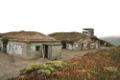 Battery Guthrie Magazine & BC Station
 -
 Battery Guthrie Gun Emplacement #1
 -
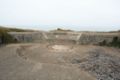 Battery Guthrie Gun Emplacement #2
 -
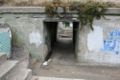 Battery Guthrie Passageway


